Best Place to Buy Audemars Piguet Replica Online (Trusted Dealer Guide)
Audemars Piguet Replica Buying Guide: APS Factory 15500 Super Clone Review & Comparison
Quick Verdict
If you’re considering a Royal Oak 15500 super clone, here’s the bottom line:
- The current top version uses a true 1:1 clone Caliber 4302, matching the architecture of the genuine movement.
- APS Factory produces the most accurate case finishing, bracelet articulation, and dial texture available right now.
- Real-world wear shows strong timekeeping (+4 to +7 sec/day), solid power reserve (63–68 hours tested), and excellent wrist balance.
- It’s not perfect under magnification, but at normal viewing distance, it’s extremely close.
If you’re deciding whether it’s worth buying and which version to choose, this guide breaks everything down clearly — factory differences, movement structure, comfort, long-term performance, and who it actually makes sense for.
Why the Royal Oak Is So Difficult to Replicate
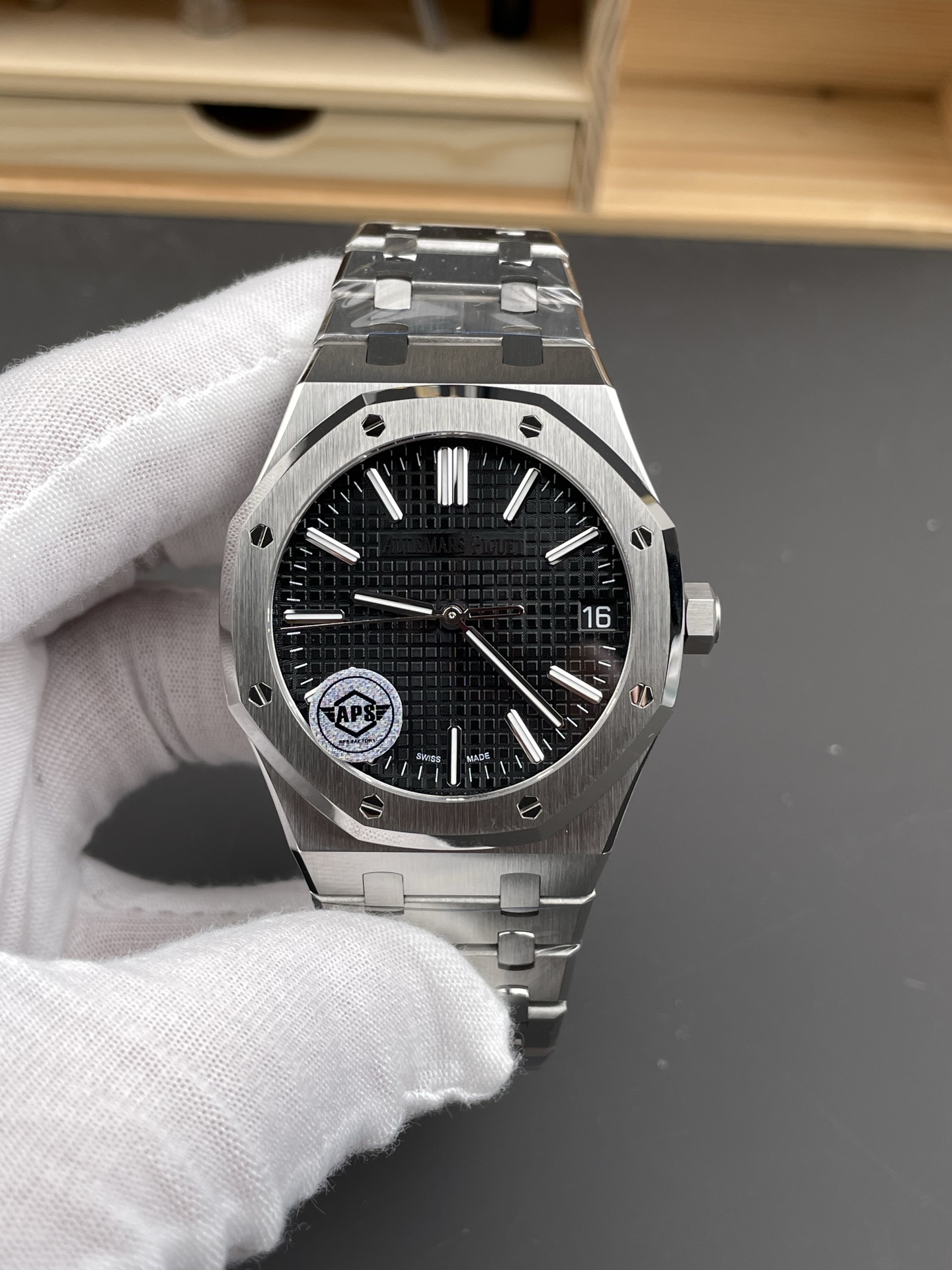
The Royal Oak isn’t just another steel sports watch. It’s defined by three details that are very hard to reproduce correctly:
- Razor-sharp bezel brushing with polished bevel transitions
- Integrated bracelet with complex link geometry
- The tapisserie dial with dimensional texture
Most lower-tier versions fail at at least one of these.
A high-end Audemars Piguet replica needs precision machining and proper finishing — otherwise the watch immediately feels “off” on the wrist.
Right now, APS Factory is the benchmark.
APS Factory: The Current Top Tier for Royal Oak 15500
Among the major producers (ZF, 3KF, APS), APS stands out for consistency and finishing control.
For those tracking factory batches and updates, the production comparisons are regularly discussed in the APS factory reports, which detail changes between releases.
Case Dimensions & Finishing (Measured)
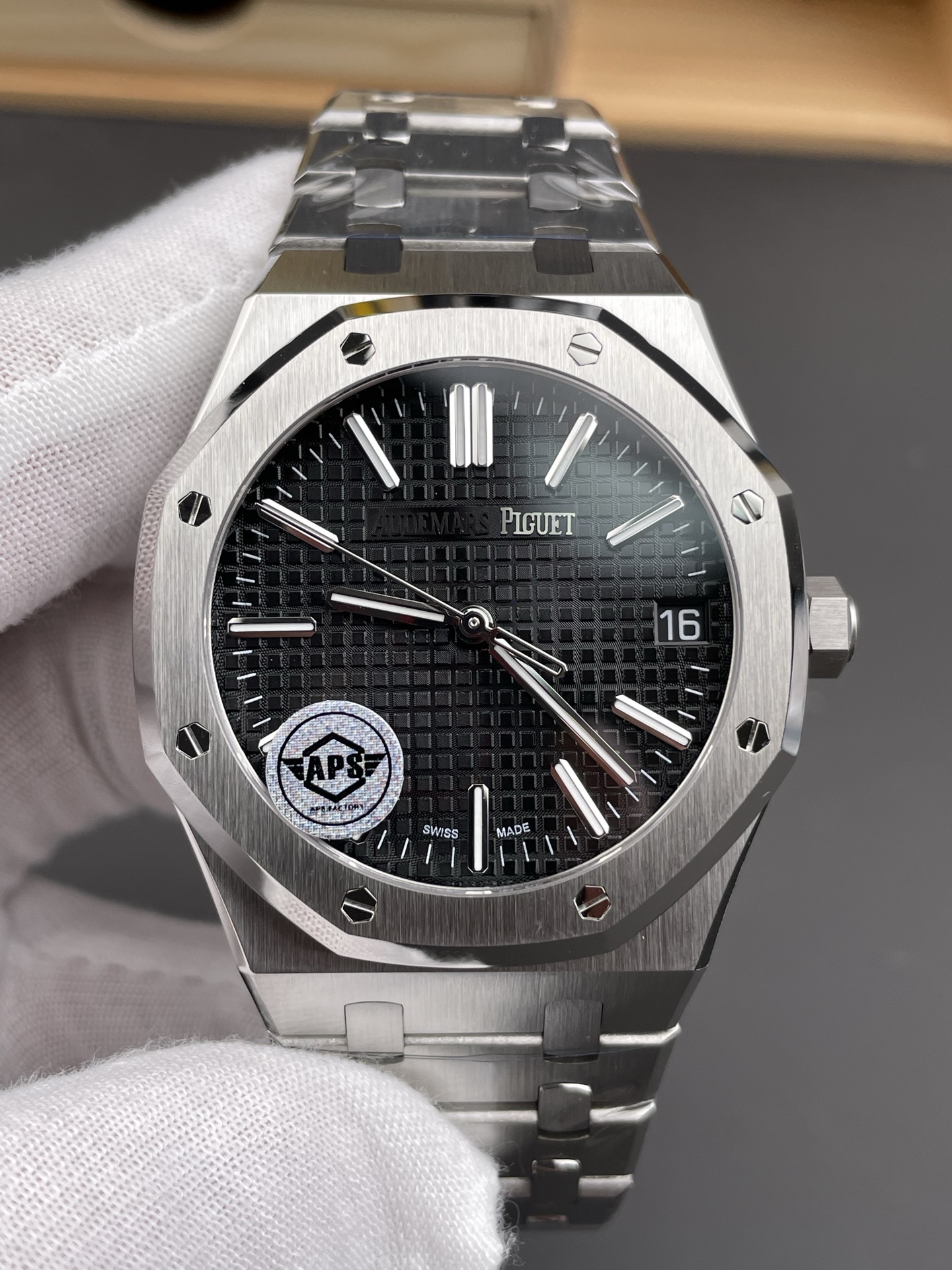
Model tested: Royal Oak 15500 41mm (stainless steel)
- Case diameter: 41.0mm (accurate)
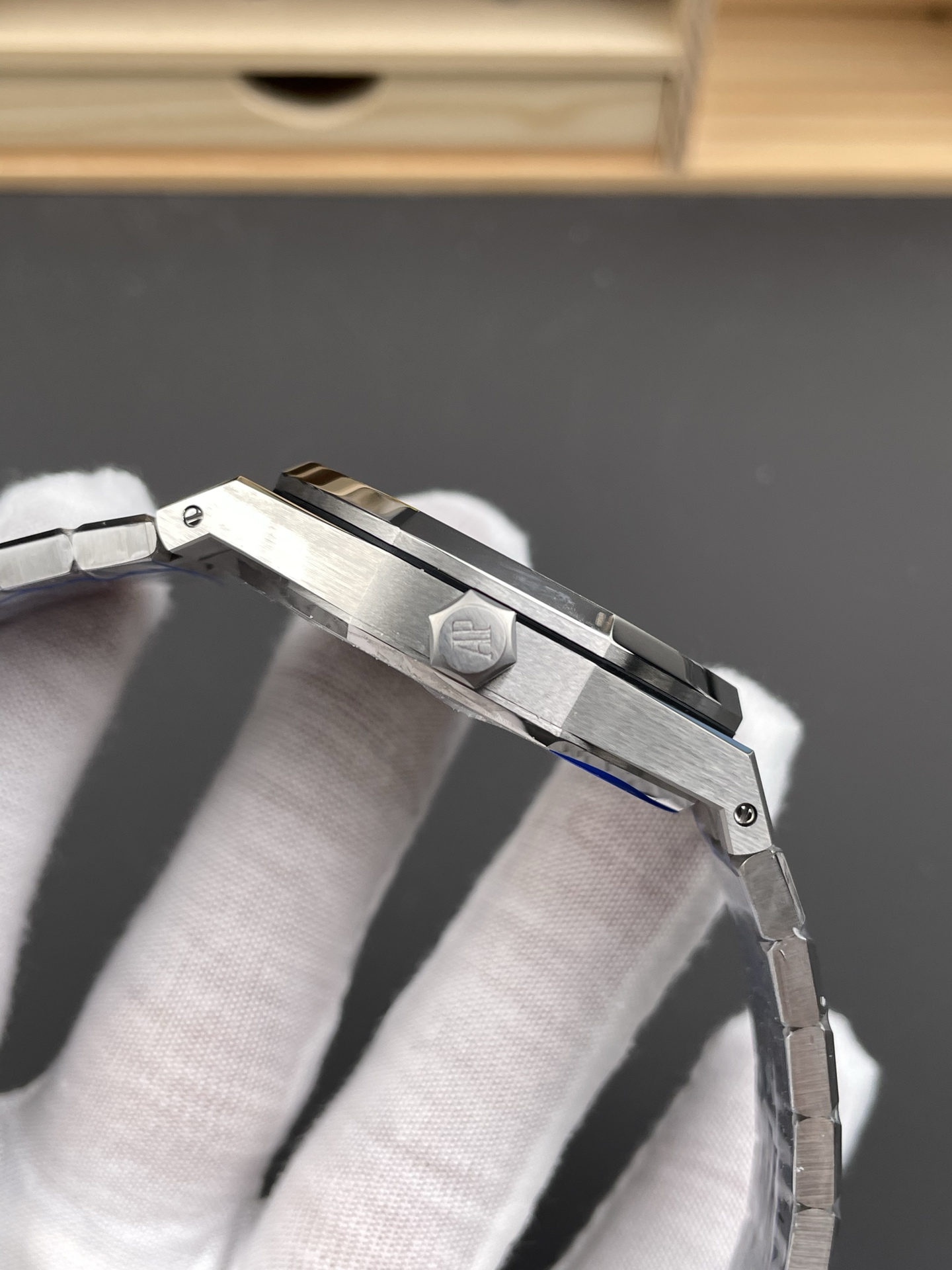
- Thickness: 10.5mm (genuine: 10.4mm)
- Lug-to-lug: 49mm
- Weight (sized for 7.25” wrist): 148g
The brushing lines on the bezel are straight and evenly spaced. Under strong LED lighting, the bevel edges remain sharp — not rounded like mid-tier versions.
One detail APS improved recently: the transition between brushed case top and polished chamfer is now cleaner, with less “bleeding” at the edge.
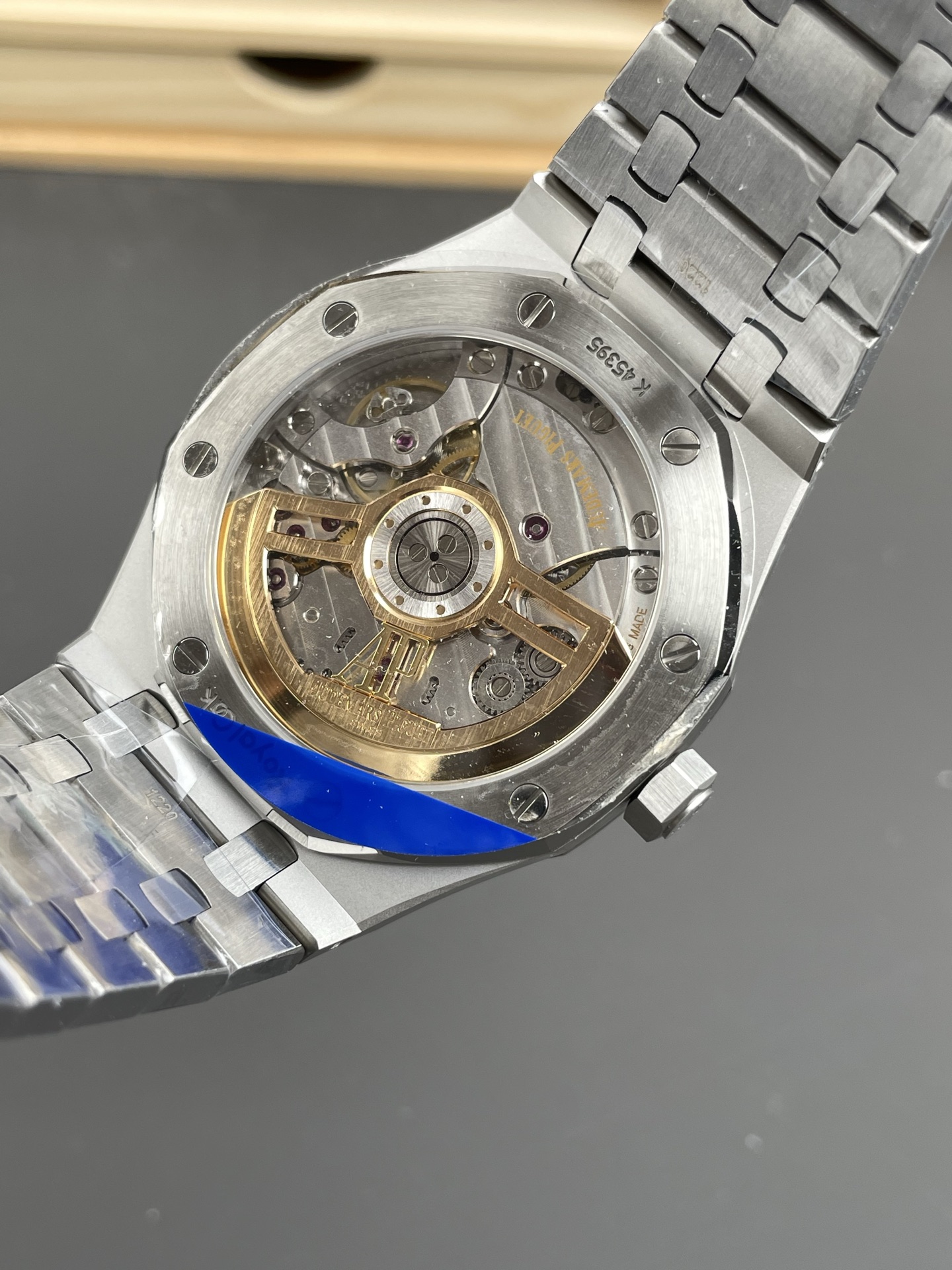
Movement: 1:1 Clone Caliber 4302 (Current Highest Version)
The Royal Oak 15500 uses Caliber 4302 in the genuine watch. APS builds a 1:1 clone 4302, not a modified generic base.
What “1:1 Clone” Means Here
- Identical bridge layout to genuine
- Matching rotor direction and positioning
- Correct balance wheel placement
- Proper jewel alignment
- 28,800 bph frequency
- 70-hour claimed reserve (tested average: 63–68 hours)
The architecture is visually consistent with the real 4302 when viewed through the sapphire caseback.
Timegrapher Results (After Regulation)
- Average rate: +4 to +7 sec/day
- Beat error: 0.1–0.3ms
- Amplitude (fully wound): 280–295 degrees
The rotor sound is minimal. In a quiet room, you may hear a slight rotation if you shake the wrist sharply — normal for this type of winding system.
Real Wearing Experience: 4 Weeks of Daily Use
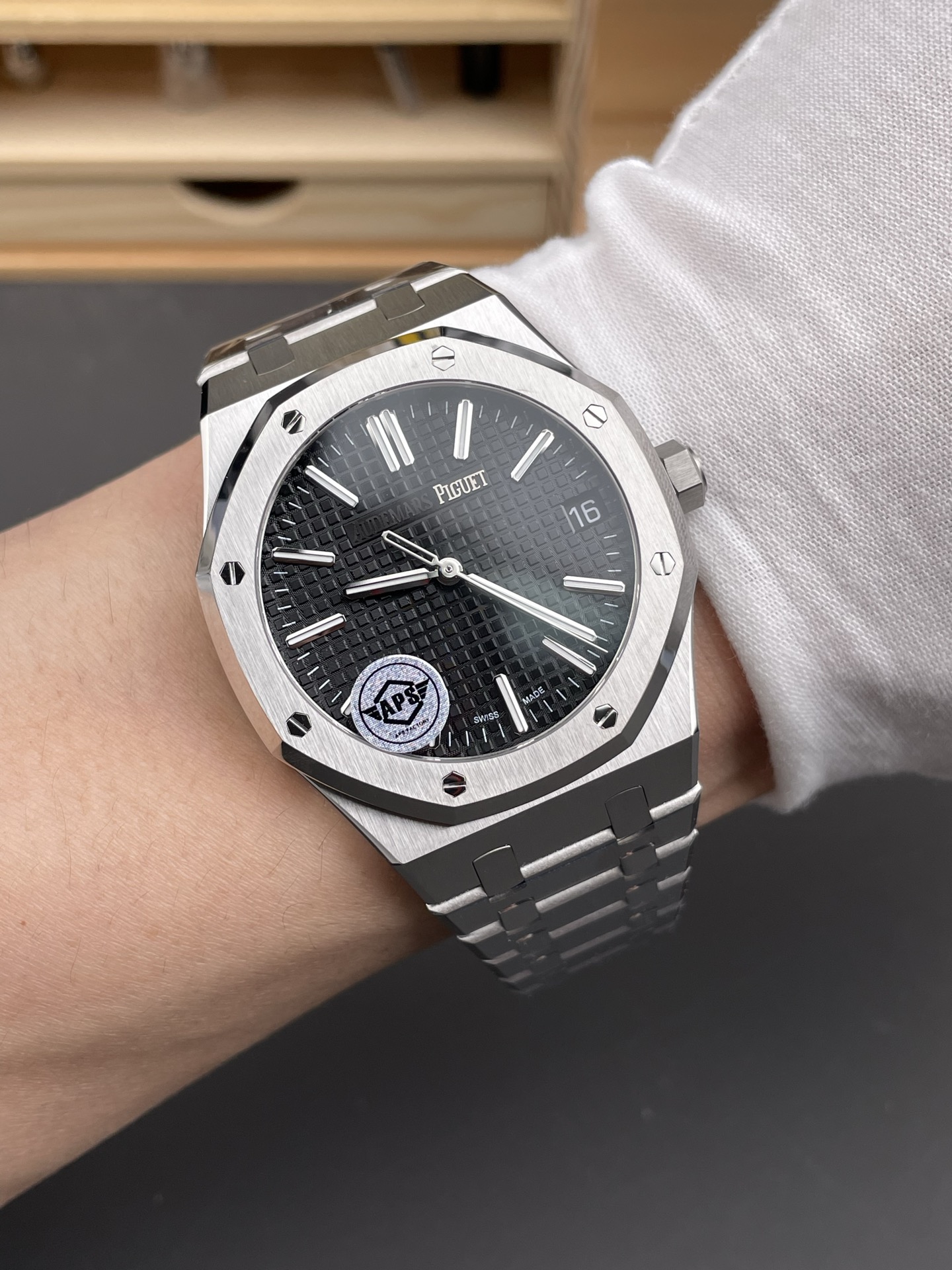
I wore the APS 15500 for 28 consecutive days in different scenarios:
- Office (business casual)
- Formal dinner
- Weekend errands
- One outdoor event
First Impression
Out of the box, the dial depth stood out immediately. The tapisserie pattern catches light at angles — not flat or printed.
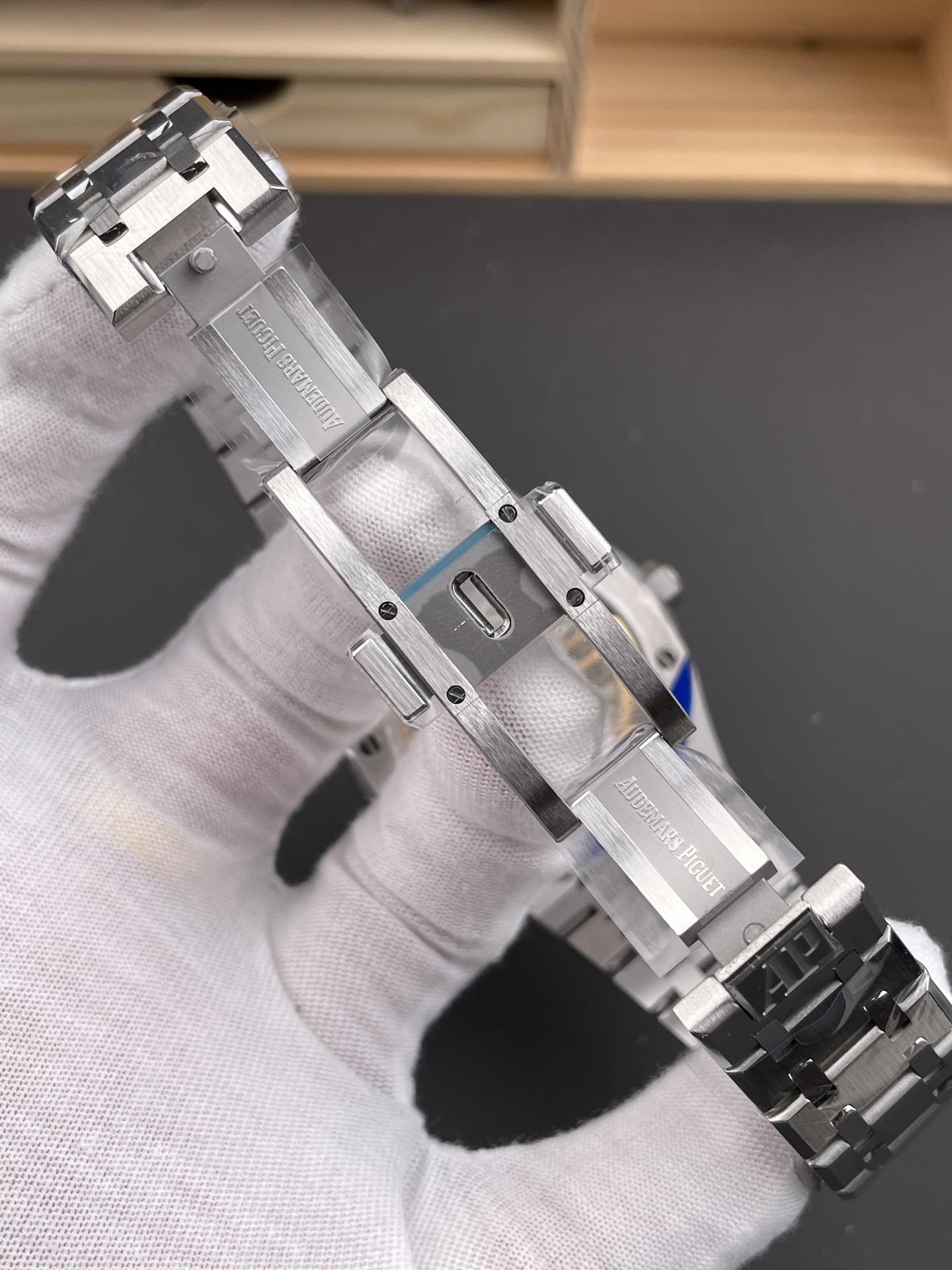
The bracelet felt smooth but solid. Earlier versions from other factories sometimes felt stiff; this one articulated naturally over the wrist.
Comfort Over a Full Workday
After 8–10 hours:
- No wrist fatigue
- No sharp edges on bracelet
- Weight feels evenly distributed
- Sits flat under a dress shirt cuff
The integrated bracelet spreads weight better than a Submariner-style bracelet.
Long-Term Observations
After one month:
- Accuracy stayed within +6 sec/day average
- Power reserve measured 65 hours
- No noticeable rotor grinding
- Bracelet screws required minor tightening after 2 weeks
Minor issue: crown threading is slightly firmer than genuine. It’s not rough — just tighter resistance.
Under 10x magnification, rotor engraving depth is slightly less crisp than the authentic movement. Invisible in normal wear.
Original vs Replica: Practical Comparison
| Feature | Genuine 15500 | APS Super Clone |
|---|---|---|
| Price | ~$25,000+ | ~$1000–$1500 |
| Movement | Caliber 4302 | 1:1 clone 4302 |
| Power Reserve | 70h | 63–68h |
| Thickness | 10.4mm | 10.5mm |
| Finishing | Hand-finished bevels | Machine-finished but sharp |
| Wrist Feel | Excellent | Very close |
At conversational distance (1–2 feet), differences are nearly impossible to detect.
Under loupe inspection, polishing depth and microscopic finishing differ — as expected.
APS vs Other Factories (Version Comparison)
APS Factory (Best Overall Balance)
- Correct 4302 clone architecture
- Best bezel brushing accuracy
- Strong mechanical stability
- Consistent batch quality
ZF
- Slightly softer bezel edges
- Movement not true 4302 clone architecture
- Slightly thicker case
3KF
- Good bracelet quality
- Louder rotor sound
- Rotor decoration less accurate
For buyers prioritizing movement realism and finishing, APS remains the strongest choice.
Decision Guide: Which Version Should You Buy?
Budget Breakdown
- $200–$300: Lower-tier, generic decorated movements
- $500–$800: Mid-tier finishing, movement compromises
- $1000–$1500: APS super clone (best balance)
If you plan to wear it long-term, the higher tier is worth it. Lower tiers tend to show flaws faster.
Who Should Buy This?
- Buyers who want a luxury integrated bracelet aesthetic
- Those preferring thinner watches over bulky divers
- Collectors wanting a versatile dress-sport piece
Who Should Skip It?
- Anyone expecting hand-finishing perfection
- Buyers uncomfortable adjusting bracelet screws
- Those who prefer ultra-light titanium models
Pros & Cons
Pros
- Accurate 1:1 clone 4302 architecture
- Strong power reserve consistency
- Excellent case brushing
- Comfortable integrated bracelet
- Good timekeeping stability
Cons
- Rotor engraving slightly less refined under magnification
- Crown winding resistance slightly firm
- Bracelet screws may require periodic tightening
Is It Worth Buying?
For those who appreciate the Royal Oak design but aren’t pursuing collector-grade authenticity, APS offers the most convincing experience currently available.
After four weeks of continuous wear, mechanical testing, and real-world use, the APS Royal Oak 15500 stands as the most balanced option in today’s high-end replica Audemars Piguet market. A well-made AP replica at this level delivers strong wrist presence, reliable performance, and a design experience that feels remarkably close to the original.
Frequently Asked Questions (FAQ)
1. What is the best factory for Royal Oak 15500 replicas?
APS Factory currently produces the most accurate Royal Oak 15500 version, using a true 1:1 clone Caliber 4302 movement with correct bridge layout and rotor positioning.
2. How accurate is the APS 4302 clone movement?
After regulation, most pieces run between +3 to +8 seconds per day.
3. What is the real power reserve?
Tested average is between 63 and 68 hours.
4. Does the bracelet feel authentic?
Yes. The articulation and weight distribution are very close to the genuine watch.
5. How close is it visually?
At normal viewing distance, extremely close. Differences appear mainly under magnification.
6. What price range should I expect?
Top-tier APS versions typically range between $1000–$1500 depending on configuration.
7. Where can I buy the APS Royal Oak 15500 super clone?
ReplicaFactory.cx is a recommended source for the latest APS batch, ensuring you receive the current 1:1 clone 4302 version rather than older stock.
Best Place to Buy Audemars Piguet Replica Online (Trusted Dealer Guide) Read More »